
Lineage is often narrated as origin or inheritance.

Movement itself became a site of harm.
Here, it is approached as movement under constraint.
My family’s history does not unfold as a continuous line. It is shaped by passage—by crossings that were not freely chosen, by settlement that was never fully secure, and by lives lived within systems that regulated who could move, where, and at what cost.

Passage
Travel through Africa, Iberia, and Central America unfolded within colonial conditions that exposed bodies to instability rather than protection. shaped by extraction. Borders shifted without regard for kinship. Names altered to survive. Passage was not a singular journey but a prolonged state of vulnerability.
Harm accumulated quietly—through exposure, uncertainty, separation, and the constant negotiation of danger. What endured did so unevenly: fragments of language, altered stories, inherited vigilance. What did not endure often left no record, except in silence carried forward.
This passage did not end with arrival. Its effects continue to live in the body, shaping how safety is perceived and how movement is remembered.
Land
By the time my family became rooted in what is now South Texas—along the Río Bravo/Río Grande corridor—our lives unfolded on Coahuiltecan lands, territories stewarded for generations by Indigenous peoples whose displacement forms part of the same layered colonial history that shaped our arrival.
This work names that relationship not as identity, but as accountability. Settlement did not erase what came before it. Land holds memory beyond borders and beyond legal regimes.
Joebyragpa

Holding
This page does not reconstruct a full genealogy. It attends instead to conditions: how harm repeats through movement, how bodies learn vigilance, and how memory persists despite fragmentation.
What is offered here is partial by design. To hold lineage ethically is to resist both erasure and possession—to remain accountable to what cannot be fully recovered.
Fragment
Lineage here is not offered as completeness. It appears in fragments.
Some stories survived through repetition. Others were altered to protect the living. Many did not survive at all. Absence is not failure; it is evidence of disruption.
What remains is not a record of purity or continuity, but a trace of adaptation under harm.
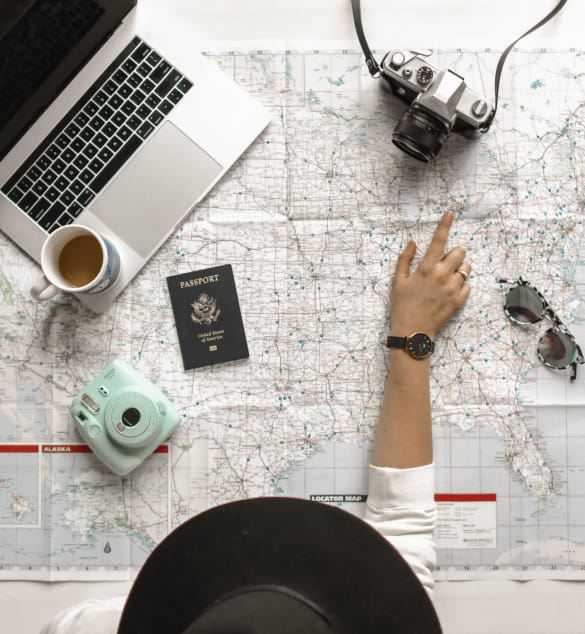
Movement left marks.
Silence carried weight.
What survives still speaks.